

What’s Really Happening in America Right Now (And Why No One Is Talking About It)
America does not feel broken everywhere, and it does not feel prosperous everywhere either. That is exactly what makes the current moment so hard to read.
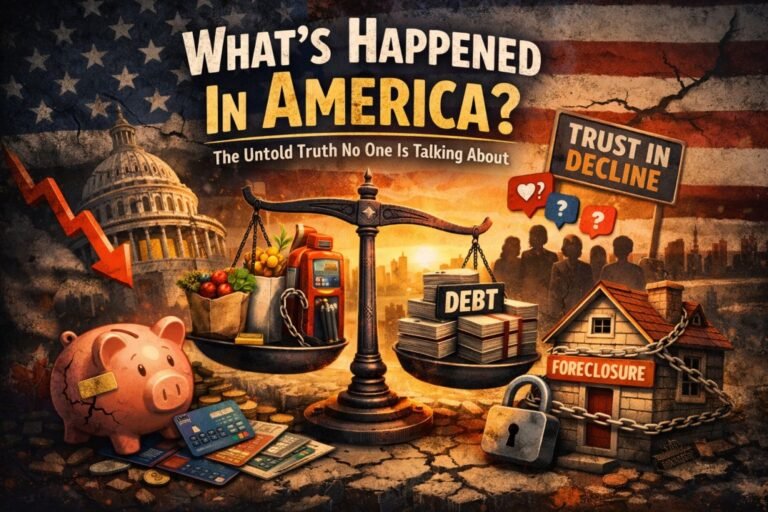
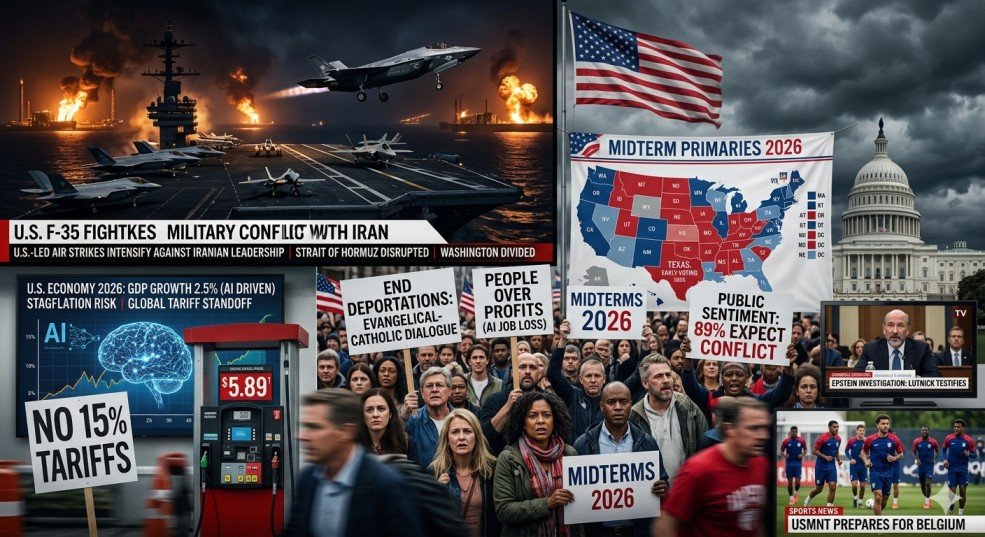
The public conversation keeps chasing one simple answer: Are we in a boom, a slowdown, or a crisis? But the truth is messier. The story of what Happened In America is not one headline. It is a slow, uneven squeeze that shows up differently in every ZIP code, every paycheck, and every family dinner. Inflation has cooled from the panic phase, but it has not disappeared. Jobs still exist, but the labor market is softer than the “strong economy” slogan suggests. Housing is still tight. Debt is still climbing. And trust in institutions is still near historic lows.
The Real Story Is Not a Collapse. It’s a Squeeze.
The easiest mistake to make right now is to confuse “not terrible” with “healthy.” On paper, America still looks functional. In real life, many households are living with constant trade-offs.
Inflation is one clue. The Consumer Price Index rose 2.4% over the 12 months ending in February 2026, with food prices up 3.1% and core inflation up 2.5%. That is far better than the peak inflation shock of earlier years, but it still means everyday essentials are costing more than they did a year ago. Grocery bills, rent, insurance, and service costs do not reset just because the rate of inflation slowed. They stay high.
That gap between “inflation is down” and “life still feels expensive” is one of the biggest reasons people feel confused. The statistics are telling the truth, but they are not telling the whole experience.
A Comparison That Explains the Mood
| What people hear | What the data says | Why it matters |
|---|---|---|
| “Inflation is under control.” | CPI rose 2.4% year over year in February 2026; food rose 3.1%. | Prices are rising more slowly, but households still feel pressure on essentials. |
| “The job market is fine.” | Payroll employment edged down by 92,000 in February; net payroll employment changed little in 2025. | The labor market is cooling, even if it has not cracked. |
| “People are doing okay.” | 73% of adults said they were doing okay or living comfortably, but that is still below the 2021 peak. | A large share of Americans are one surprise bill away from stress. |
| “America has moved on.” | Household debt hit $18.8 trillion in Q4 2025. | Families are carrying more balance-sheet pressure than the headlines admit. |
What the Job Market Is Whispering
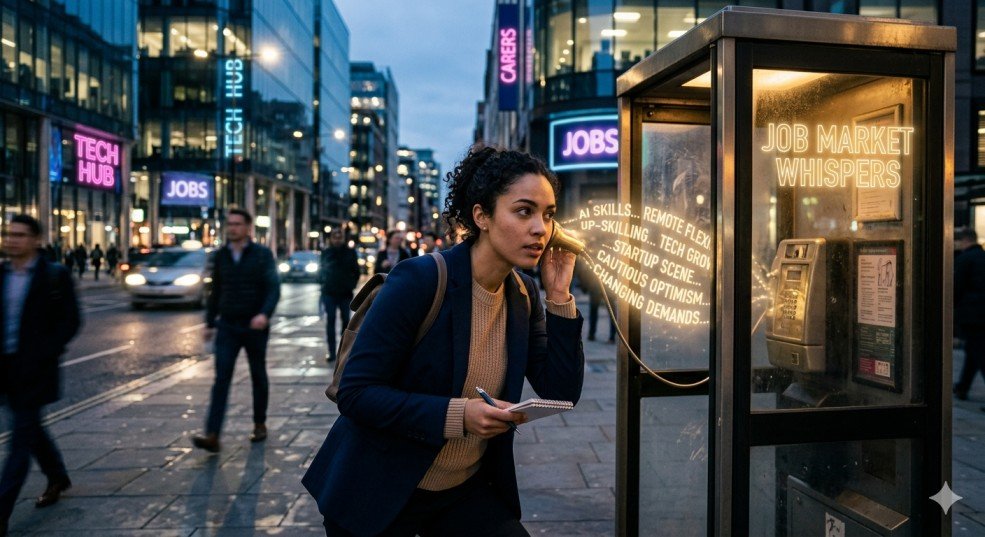
The employment story is more subtle than a single unemployment number. In February 2026, total nonfarm payroll employment edged down by 92,000, and the BLS said payroll employment changed little on net in 2025. The labor force participation rate was 62.0%, and long-term unemployment stood at 1.9 million people, up from 1.5 million a year earlier.
That matters because the labor market can still look “okay” while quietly becoming less forgiving. A market that is no longer adding jobs with confidence feels very different from one that is genuinely expanding opportunity.
And that is the hidden anxiety in America right now: not mass unemployment, but a sense that the ladder has fewer easy rungs.
Housing Is Still the Pressure Point Nobody Escapes
Housing remains one of the clearest examples of the American squeeze. In the fourth quarter of 2025, the national rental vacancy rate was 7.2%, while the homeowner vacancy rate was only 1.2%. That tells you something important: the rental market has room to breathe in some places, but the for-sale housing market remains tight.
At the same time, household debt keeps rising. The New York Fed reported that total household debt increased by $191 billion in Q4 2025, reaching $18.8 trillion. Mortgage balances alone reached $13.17 trillion.
This is where the lived reality becomes obvious. People are not just paying more for rent or mortgages. They are also carrying more weight underneath them: credit cards, car loans, insurance, subscriptions, medical costs, and the constant feeling that one unexpected expense could undo a month of discipline.
The Quiet Crisis Is Not Only Economic
America’s biggest hidden problem may be emotional and civic, not just financial.
The CDC says about 1 in 3 U.S. adults report feeling lonely, and about 1 in 4 report not having social and emotional support. The agency also describes social isolation and loneliness as widespread problems that pose a serious threat to mental and physical health.
That is not a side note. It is part of the main story.
When people feel financially squeezed, socially disconnected, and politically unheard, they stop trusting the system around them. Pew found that just 17% of Americans say they trust the government in Washington to do what is right “just about always” or “most of the time,” one of the lowest readings in nearly seven decades.
So the real question is not only “What happened in America economically?” It is also: what happens to a country when its people feel that institutions, parties, and even neighbors are no longer on the same page?
Why No One Is Talking About It
Because the story is boring at first glance.
It is not a dramatic crash. It is a slow accumulation of pressure. That makes it harder to sell, harder to simplify, and harder to turn into a shouting-point. The media loves sharp edges: boom or bust, red or blue, success or failure. But America right now is living in the gray area in between.
Here is my read after looking at the data: the country is not in one unified crisis. It is in several overlapping mini-crises that do not always happen to the same people at the same time.
Some families are still spending confidently. Others are quietly using savings, credit, or postponing care. Some workers are doing fine. Others are discovering that the job market is less generous than it looked six months ago. Some cities are still expanding. Others are stuck with expensive housing, weak mobility, and more people who feel disconnected than connected.
The Bigger Insight
America’s real problem right now is not that nothing is working. It is that the system is working unevenly.
The economy is still producing. But the benefits are uneven.
The labor market is still moving. But the momentum is weaker.
Households are still coping. But many are coping through debt.
People are still online, but more isolated.
Institutions still exist, but trust is thin.
That is why the national mood feels off. The official numbers do not always match the emotional temperature of the country. And when that gap gets too wide, people stop believing the story they are being told.
Conclusion: The Story America Needs to Hear
What happened in America right now is not a single event. It is a quiet reset of expectations.
People are learning that lower inflation does not mean affordable life. A stable job market does not mean a secure future. More spending in the economy does not mean more peace in the household. And political noise does not equal public trust.
That is the part nobody wants to say out loud, but everyone can feel.
The real America right now is not one headline. It is a nation trying to stay afloat while costs, debt, loneliness, and uncertainty pull in different directions.
And that is exactly why the story matters.
Also Read: Automotive Glass Replacement Shops Business Ideas 2026