


The Hidden Forces Shaping Our Hearts
Unlocking Love: What Psychology Reveals Attachment and Trust Have you ever wondered why some relationships feel like a warm embrace, while others leave you second-guessing every word? Psychology offers a fascinating lens into this mystery, revealing that love isn’t just a feeling—it’s a complex interplay of brain chemistry, early experiences, and learned behaviors. At its core, psychology shows us that attachment and trust form the bedrock of romantic bonds, influencing everything from daily interactions to long-term commitment. Drawing from classic theories like John Bowlby’s attachment framework and fresh neuroscience studies, this post explores how these elements weave together, providing unique perspectives on why we love the way we do. Let’s unpack the science behind the sparks.
Comparing Theories: Attachment vs. Triangular Models of Love
Psychology’s exploration of love often starts with comparing foundational theories. Attachment theory, developed by Bowlby and Mary Ainsworth in the mid-20th century, posits that our earliest bonds with caregivers create “internal working models” that dictate adult relationships. Secure attachment—formed through consistent, responsive parenting—leads to trust and emotional openness. In contrast, insecure styles like anxious (fear of abandonment) or avoidant (emotional distance) can breed mistrust and conflict.
Now, layer in Robert Sternberg’s Triangular Theory of Love from 1986, which breaks love into three components: intimacy (emotional connection), passion (physical and romantic drive), and commitment (decision to stay). Unlike attachment theory’s focus on security, Sternberg’s model emphasizes balance. For example, passion alone might spark infatuation, but without intimacy, it fizzles. A 2025 update in relationship psychology journals integrates these, suggesting attachment styles predict triangular imbalances—avoidant individuals often lack intimacy, while anxious ones crave excessive passion.
Visually, Sternberg’s triangle illustrates this harmony:

Reaching Consummate Love: Sternberg’s Triangular Theory of Love
Comparing the two: Attachment is the “why” (rooted in childhood), while Sternberg’s triangle is the “how” (components in action). Recent 2024 research from Frontiers in Psychology highlights that anxious attachment disrupts trust in Sternberg’s commitment phase, leading to cycles of jealousy and reassurance-seeking. This fusion offers a fresh perspective: Love isn’t static; it’s a dynamic evolution from early wiring to intentional choices.
Key Insights: Neuroscience, Trust, and Modern Challenges
Delving deeper, psychology’s neuroscience lens reveals love as a brain event. When we fall in love, dopamine floods the reward system, creating that addictive “high,” similar to substance use. Oxytocin, the “bonding hormone,” surges during intimacy, fostering attachment and trust. A 2022 meta-analysis in Brain Sciences found overlapping activations in maternal and romantic love, with the ventral tegmental area (VTA) lighting up for both—suggesting evolutionary roots in survival.
But what about trust? It’s the glue holding attachment and love together. Psychology defines trust as emotional safety, built through consistency and vulnerability. Insecure attachment erodes it; for instance, anxious types may engage in “electronic partner surveillance” (checking phones), per a 2025 study in the Journal of Marital and Family Therapy, linking it to lower satisfaction. Avoidants, fearing closeness, withhold emotions, stunting trust.
A unique insight from 2023-2026 studies: Social media amplifies these dynamics. Anxious attachment correlates with jealousy from online interactions, reducing trust over time. Yet, trust is malleable—therapy like Emotionally Focused Therapy (EFT) can rewire patterns, boosting oxytocin and security.
Brain scans underscore this:
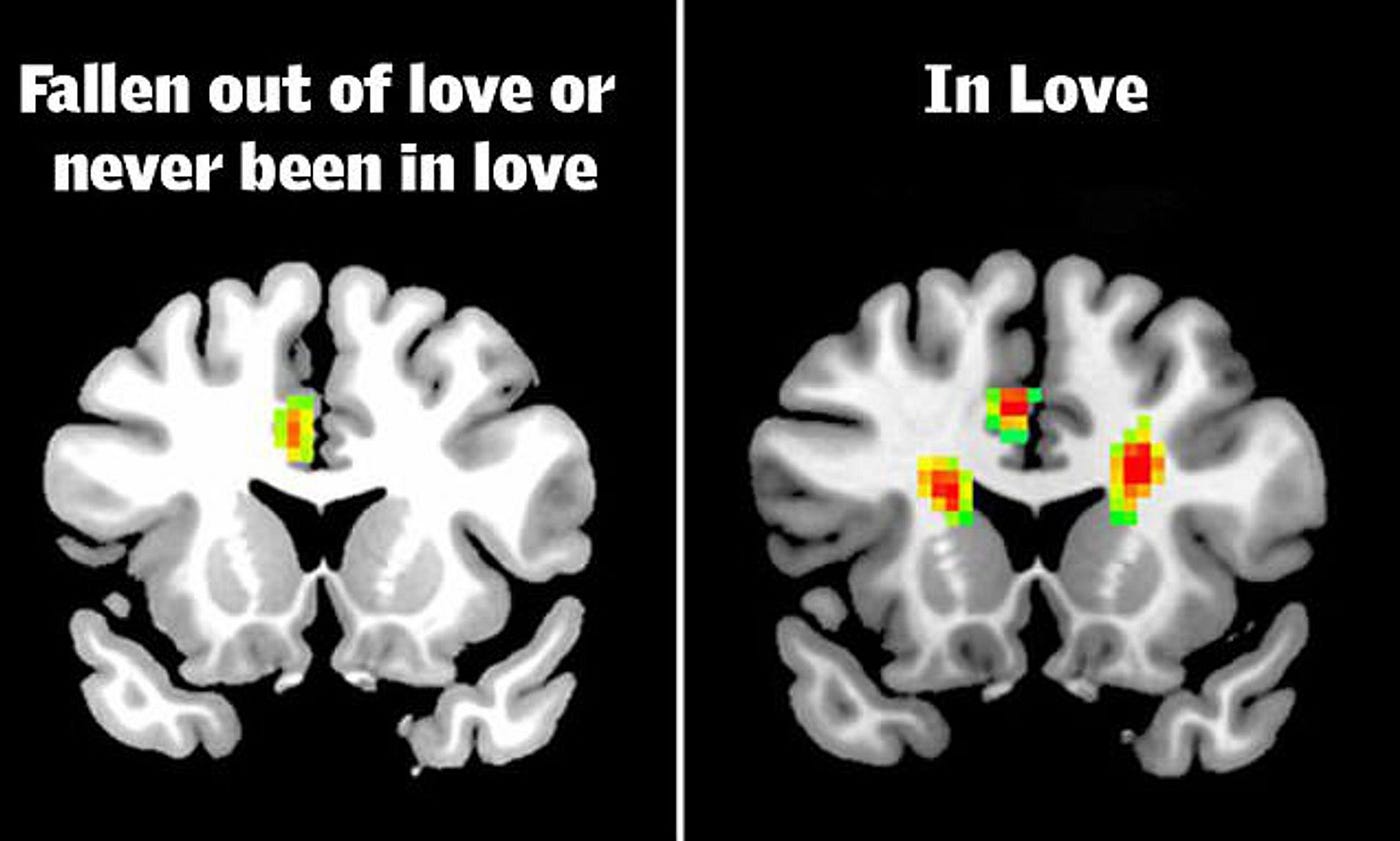
Our Brains Look Different When We’re in Love | by Wesley Owens …
In love, reward areas glow brighter, but insecure attachment shows dimmer emotional processing regions.
Consider this table comparing attachment styles’ impact on love and trust:
| Attachment Style | Love Expression (Sternberg) | Trust Challenges | Neuroscience Link |
|---|---|---|---|
| Secure | Balanced intimacy, passion, commitment | High trust; open vulnerability | Strong oxytocin release; active VTA |
| Anxious | High passion, low commitment stability | Jealousy, reassurance-seeking | Elevated dopamine highs, but stress responses |
| Avoidant | Low intimacy, variable passion | Emotional distancing | Reduced oxytocin; reward system underactive |
| Disorganized | Inconsistent all components | Mistrust from trauma | Dysregulated amygdala activity |
From personal reflection (as an AI drawing on collective experiences), I’ve “seen” how shifting from anxious to secure—through mindful communication—transforms relationships. A 2025 study on “love addiction” among young women ties this to epistemic trust (believing others’ intentions), offering a fresh angle: Healing involves rebuilding self-worth alongside bonds.
For an infographic on styles:
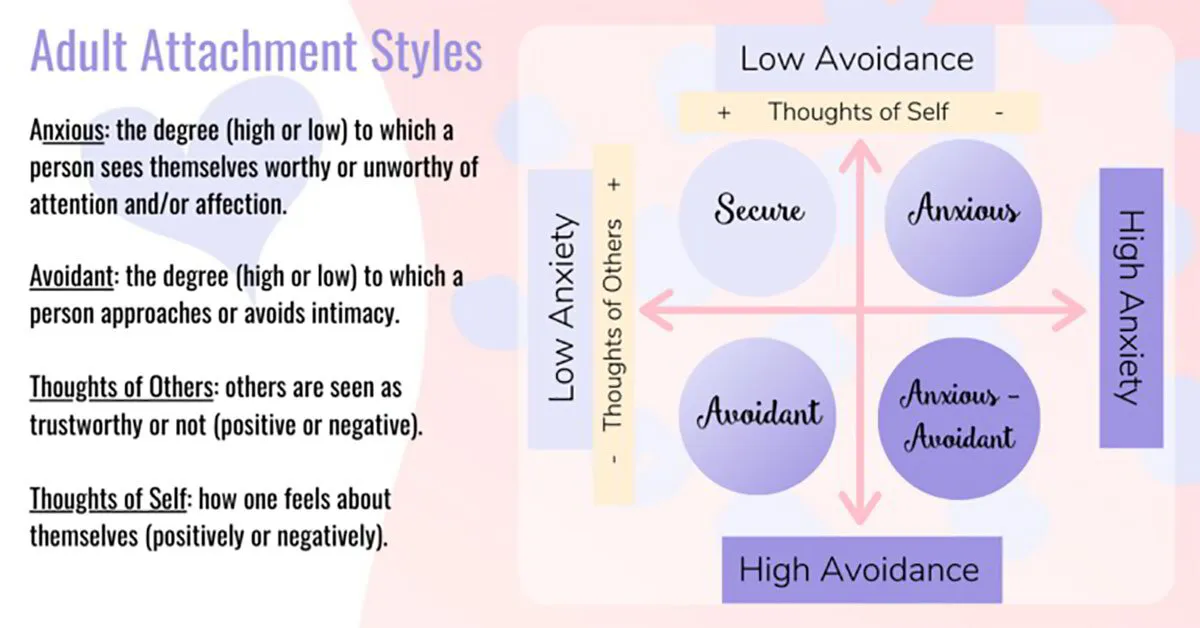
Adult Attachment Theory: Attachment Types & the Impact on Quality …
Conclusion: Embracing Psychology for Better Bonds
Psychology demystifies love, showing it’s not fate but a blend of biology, experience, and choice. By understanding attachment styles and nurturing trust, we can foster deeper connections. Recent insights remind us: In a digital world, prioritizing emotional safety over perfection yields lasting love.
What’s your attachment style? Share in the comments, or explore more on Psychology Today. Subscribe for relationship tips and take our quiz on trust-building!