

Introduction — the tiny habit that feels huge
Digital Detox — and Why It Might Save Your Sleep, Focus, and Mood
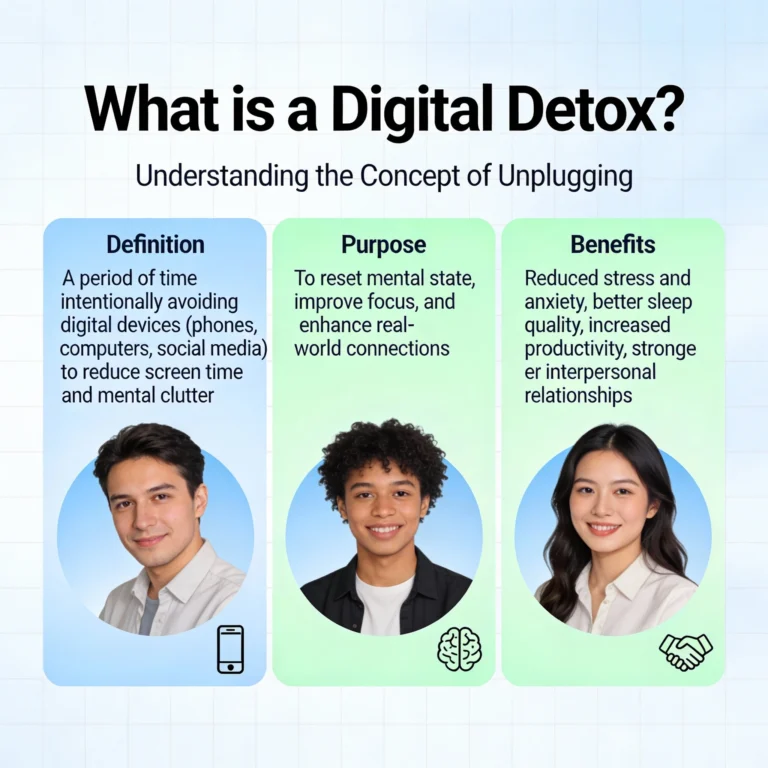
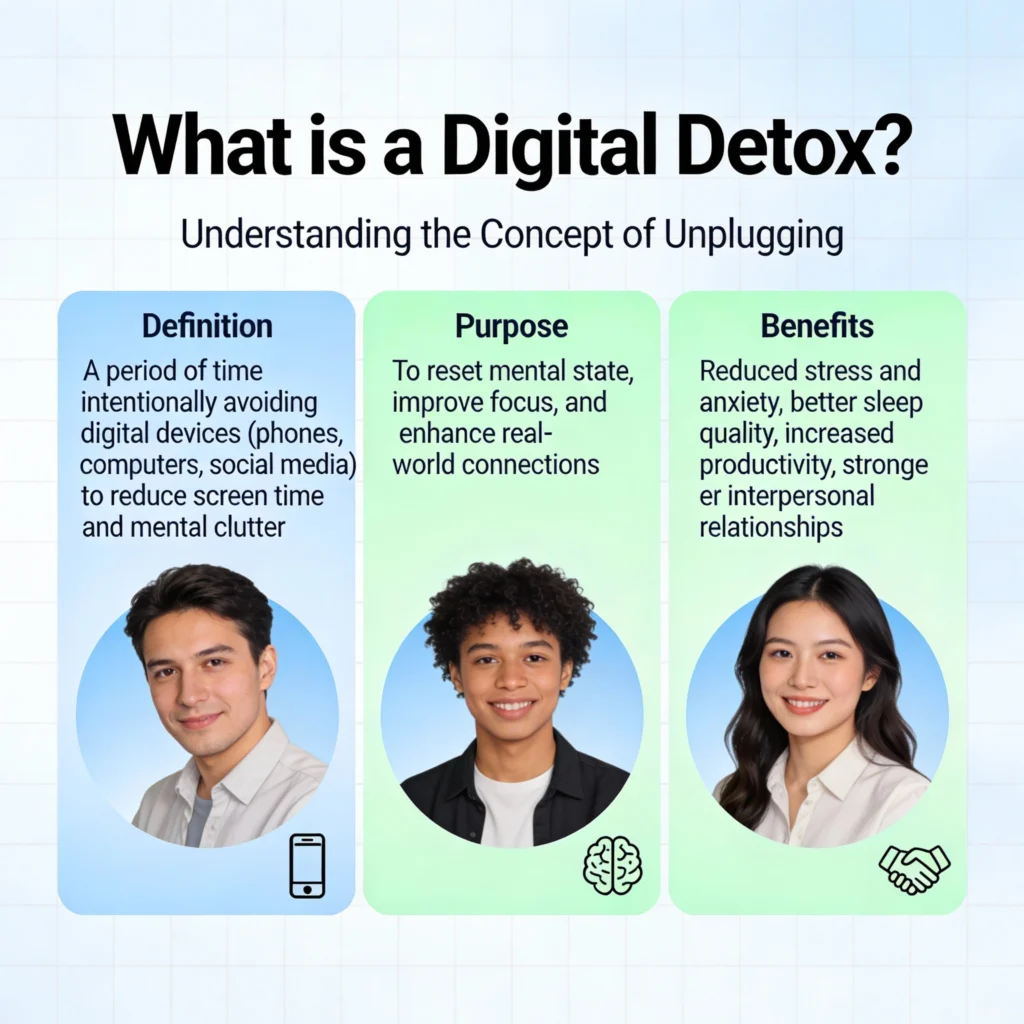
You wake up, reach for your phone, and—before coffee or a shower—you’re scrolling headlines and messages. Sound familiar? That automatic grab is exactly why Digital Detox is now a mainstream wellness idea. At its simplest, a digital detox means intentionally reducing or refraining from digital device use for a set time to improve mental and physical well-being. But like any self-care trend, the reality is more nuanced: definitions vary, benefits depend on how you do it, and long-term change is about habits—not a single weekend without your phone.
What “digital detox” actually means (and why experts disagree)
There isn’t one single, universally accepted definition. Some people mean a total abstinence from screens for a weekend; others mean a moderated, purpose-driven reduction—turning off notifications, using app limits, or banning screens from the bedroom. Systematic reviews find large variation in how studies define a digital detox, from complete abstinence to partial reductions, which makes comparing results tricky. In other words: your detox might look very different from your friend’s—and that can be okay.Digital Detox — and Why It Might Save Your Sleep, Focus, and Mood
What the research says — benefits (and limits)
Here’s the practical, evidence-based summary—what you’re most likely to feel if you reduce your digital load.
- Improved mood and reduced anxiety/depression symptoms. Several trials and reviews report measurable reductions in anxiety and depressive symptoms after short-term social-media or screen breaks. One large study found notable drops in depression and anxiety after a week-long social media break.
- Better sleep quality. High screen time is strongly associated with delayed bedtimes, shorter sleep duration, and lower sleep efficiency (partly because screens emit light that affects melatonin and partly because content is stimulating). Cutting evening screen time tends to improve sleep metrics.
- Increased focus & time for meaningful activities. People report more time for exercise, hobbies, reading, and face-to-face interactions after detoxing—though objective measures of attention vary across studies.
- Fewer physical complaints. Less eyestrain, headaches, and neck/back discomfort are common short-term benefits when device use is reduced.
Important caveat: Reviews emphasize heterogeneity—some people experience strong benefits, others modest changes, and lasting results require habit change rather than a one-off “detox weekend.”
Quick comparison: Types of digital detoxes
| Detox type | What it looks like | Best for | Expected outcome |
|---|---|---|---|
| Full abstinence | No screens at all for a set period (24–72 hrs) | Reset, retreats | Strong short-term relief; hard to sustain |
| Timed detox | Screen-free windows (e.g., 7–9pm) | Sleep & family time | Improved bedtime routine, better sleep |
| App-specific | Remove social apps, keep necessary tools | Social-media stress | Reduced comparison & anxiety |
| Micro-detox / habits | Turn off notifications, charge outside bedroom | Busy people | Gradual but durable gains |
| Digital Sabbatical | Weeks to months off for big life changes | Major lifestyle reset | Deep change, high cost/benefit |
(Adapt your approach—small, realistic steps typically produce the most durable results.) Sources: clinical reviews and practical guides.
A realistic 7-step plan (so you don’t fail spectacularly)
Based on evidence and what people actually stick to, here’s a practical playbook:
- Define your “why.” Better sleep? Less anxiety? More family time? A clear goal increases follow-through.
- Start small. Try a 24-hour weekend micro-detox or a nightly 2-hour screen-free window before attempting full abstinence. Gradual wins beat dramatic failures.
- Design tech-free zones. Bedrooms, dinner tables, and cars are great places to start. Charging phones outside the bedroom helps sleep.
- Replace—not just remove. Plan alternatives: walk, call a friend, read a book, or cook. Boredom often drives relapse.
- Use tools to help. Set app timers, turn off social notifications, enable “Do Not Disturb,” or use grayscale. These nudges reduce friction.
- Be honest with people. Tell friends and coworkers if you’ll be less reachable; set expectations to reduce FOMO.
- Reflect and iterate. After a detox, journal what improved and what didn’t—then tweak your plan. Long-term gains come from repeating and scaling small changes.
Real-life story (short)
A college student I coached swapped nights of doomscrolling for a 10-day experiment: delete social apps from their phone and use a basic feature phone after 9 pm. Within a week they reported sleeping earlier, finishing assignments with less procrastination, and reconnecting with a guitar hobby. The change wasn’t magical—there was boredom and occasional relapse—but concrete wins (finished assignments, better sleep) made them continue a nightly phone-free period. This mirrors trial results where participants often replace phone time with measurable life gains.
Common objections — answered
“I need my phone for work.” Then start with micro-detoxes and tech-free zones, not full abstinence. Use work-only profiles and mute nonessential notifications.
“Social media is how I connect.” Instead of all-or-nothing, prune feeds, schedule social time, and prioritize direct messages with close friends. Quality beats quantity.
“Detox feels performative.” Make it purposeful. Focus on one measurable goal (better sleep, less stress) and treat the detox as an experiment, not a virtue signal.
Tools & resources (quick links)
- Practical NHS guide to managing screen use and addiction.
- Systematic reviews of digital detox interventions and outcomes.
- CDC overview on screen time and sleep impacts.
Final thoughts — the detox is the start, not the finish
A digital detox can be a powerful restart button. Research shows it often improves sleep, mood, and time use—especially when targeted and followed by small, sustainable habit changes. But the most important insight is this: don’t treat a detox as a one-off moral victory. Use it as a diagnostic tool to learn how screens affect you, then build realistic routines that support your goals.
Try a 48-hour micro-detox this weekend (no social apps after 8 pm). Share your results in the comments—what surprised you, what was hard, and what improved? Want a ready-made checklist or printable “digital detox plan” for your blog or newsletter? Reply “Detox Plan” and I’ll create a downloadable, step-by-step PDF you can use or give to readers.
Read also: “Why Digital Detox Is the New Self-Care”
Related: “How to Reduce Screen Time Without Quitting Social Media”