

Introduction: Why the Gulf Coast Feels Different
There’s something about the Gulf Coast that slows you down—in the best way.
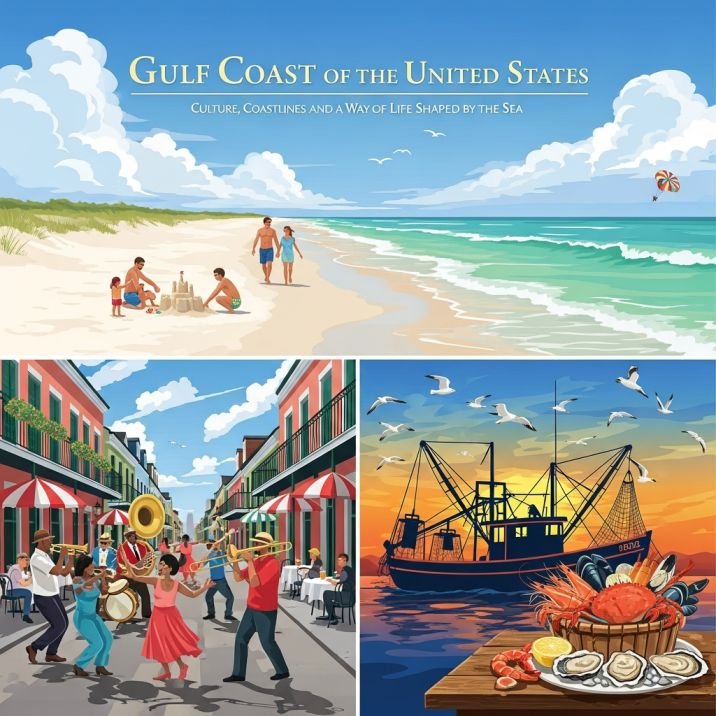
From the warm waters of the Gulf of Mexico to the sound of live blues drifting out of a roadside bar, the Gulf Coast of the United States isn’t just a destination. It’s a rhythm, a culture, and a deeply rooted coastal identity shaped by water, weather, and generations of resilience.
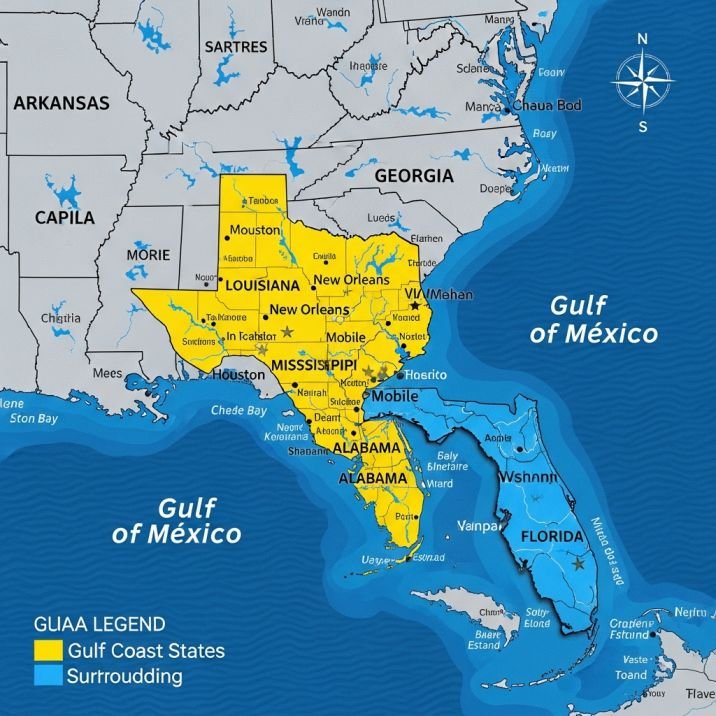
Stretching across Texas, Louisiana, Mississippi, Alabama, and Florida, the Gulf Coast blends natural beauty with cultural depth in a way few regions can match. Whether you come for the beaches, the seafood, or the history, you leave with a stronger sense of place—and perspective.
Where Is the Gulf Coast? A Regional Overview
The Gulf Coast of the United States borders the northern edge of the Gulf of Mexico and spans over 1,600 miles of shoreline.
States That Define the Gulf Coast
- Texas – Vast beaches, ports, and energy hubs
- Louisiana – Wetlands, bayous, and Creole culture
- Mississippi – Quiet coastal towns and shipbuilding history
- Alabama – White-sand beaches and maritime heritage
- Florida (Panhandle & Gulf Side) – Emerald waters and tourism hotspots
Gulf Coast vs Other U.S. Coastlines
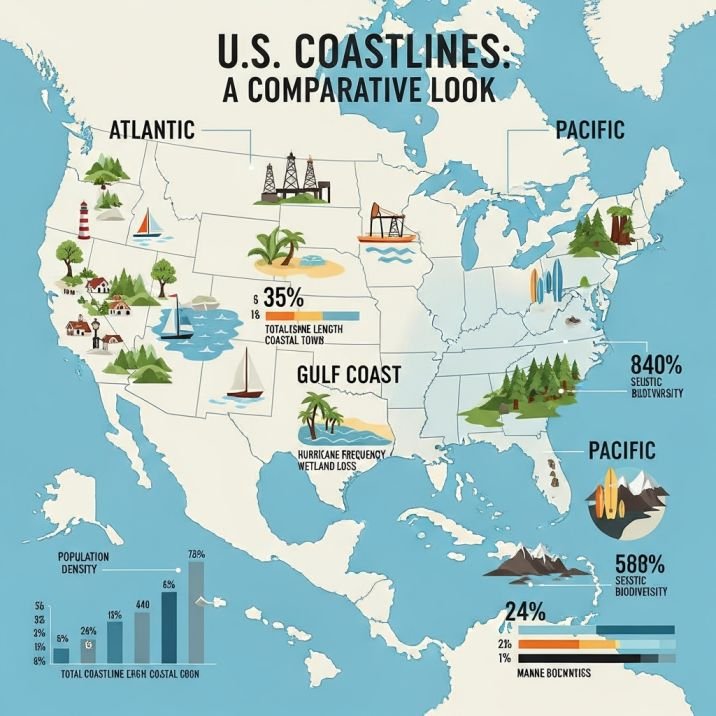
| Feature | Gulf Coast | East Coast | West Coast |
|---|---|---|---|
| Water Temperature | Warm year-round | Cold to moderate | Cold |
| Beach Style | Soft, white sand | Rocky to sandy | Rugged cliffs |
| Culture | Southern, Creole, Latin | Colonial, urban | Laid-back, tech-driven |
| Seafood | Shrimp, oysters, crab | Lobster, cod | Salmon, tuna |
The Natural Beauty of the Gulf Coast
Beaches That Stretch for Miles
The Gulf Coast beaches are known for their powdery sand and gentle waves. Unlike the Atlantic or Pacific, the Gulf’s calmer waters make it ideal for families and long, relaxing stays.
Popular beach destinations include:
- Gulf Shores, Alabama
- Destin, Florida
- South Padre Island, Texas
Wetlands, Bayous, and Wildlife
Beyond the beaches, the Gulf Coast is an ecological powerhouse. According to NOAA, Gulf Coast wetlands support nearly 40% of U.S. coastal wetlands, acting as storm buffers and wildlife habitats.
You’ll find:
- Alligators and migratory birds
- Mangrove forests and salt marshes
- One of the richest marine ecosystems in North America
Culture: Where History, Music, and Food Collide
A Cultural Melting Pot
The Gulf Coast culture blends Native American, African, French, Spanish, and Caribbean influences. This mix shows up everywhere—from language and architecture to music and festivals.
New Orleans alone represents centuries of layered history, but smaller towns carry just as much character.
Music Born from the Coast
The Gulf Coast played a quiet but powerful role in shaping:
- Blues
- Jazz
- Zydeco
Live music isn’t entertainment here—it’s storytelling.
Gulf Coast Cuisine: More Than Seafood
Yes, seafood dominates—but it’s the flavor combinations that make Gulf Coast food legendary.
Staples of Gulf Coast Cooking
- Shrimp & grits
- Crawfish boils
- Gumbo and jambalaya
- Blackened redfish
Fresh ingredients, bold spices, and slow cooking define the region’s food philosophy.
Economy of the Gulf Coast: More Than Tourism
While tourism drives visibility, the Gulf Coast economy is surprisingly diverse.
| Industry | Role in the Gulf Coast |
|---|---|
| Energy | Oil, gas, and renewables |
| Shipping | Major U.S. ports |
| Fishing | Commercial & local markets |
| Tourism | Beaches, festivals, cruises |
Ports like Houston and New Orleans are among the busiest in the nation, making the Gulf Coast vital to U.S. trade.
Environmental Challenges & Coastal Resilience
Life on the Gulf Coast comes with challenges.
Hurricanes & Climate Impact
The region faces:
- Hurricanes
- Coastal erosion
- Rising sea levels
Yet the Gulf Coast is also a model of resilience. Community-driven restoration projects and wetland conservation efforts are actively reshaping how the region adapts to climate change.
Why the Gulf Coast Is a Different Kind of Travel Experience
The Gulf Coast isn’t flashy like Miami or dramatic like Big Sur.
It’s authentic.
Here, you’ll find:
- Locals who talk to strangers
- Family-owned seafood shacks
- Sunsets that feel personal
Traveling the Gulf Coast feels less like sightseeing—and more like being welcomed into someone’s home.

Key Insights: What Makes the Gulf Coast Unique
- Warm waters and relaxed pace of life
- Deep cultural roots shaped by migration and survival
- Economic importance beyond tourism
- Strong connection between people and environment
Conclusion: The Gulf Coast Stays With You
The Gulf Coast of the United States doesn’t shout for attention—it earns it quietly.
It’s a place where nature and culture coexist, where history isn’t locked in museums, and where the sea shapes daily life. Whether you’re visiting for a weekend or studying it from afar, the Gulf Coast leaves a lasting impression because it feels real.
Not polished. Not rushed. Just honest.
🌊 Have you visited the Gulf Coast—or plan to?
Share your experience in the comments, explore our related travel and regional guides, or subscribe for in-depth destination stories that go beyond the surface.