

A small hook (and why Lifestyle matters)
You know that jittery, half-asleep feeling after one too many doom-scroll sessions? That’s your brain asking for a timeout. A purposeful digital detox isn’t about going medieval on tech — it’s about choosing offline experiences that replenish attention, creativity, and calm. Whether you’re reclaiming weekend hours or carving out 30 minutes before bed, the hobbies below are practical, evidence-informed ways to reboot your Lifstyle and stick with it. Harvard Medical School research shows short, intentional breaks from social media can measurably improve mood and sleep when done properly.

Quick comparison: digital life vs. hobby-infused detox
| Screen Habit | Typical Result | Hobby Alternative | Why it helps |
|---|---|---|---|
| Endless social feed | Anxiety, sleep issues | Daily journaling (15 min) | Rebuilds narrative control; reduces rumination. |
| Passive scrolling | Time loss | Short neighborhood walks | Light exercise + nature lowers stress hormones. |
| Late-night videos | Poor sleep | Evening reading ritual | Signals your circadian rhythm; promotes relaxation. |
(Use this table as your quick “swap” cheat sheet when temptation hits.)
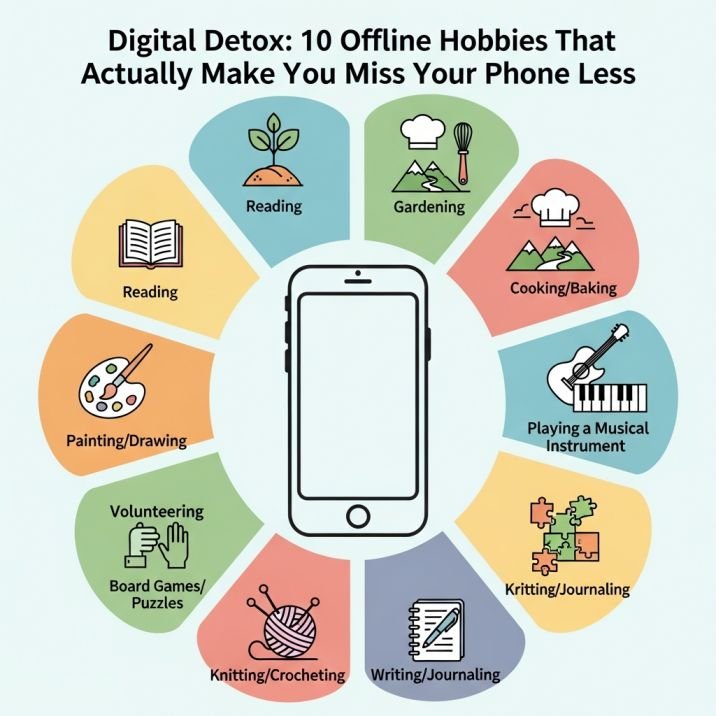
The 10 hobbies (how to do them, why they work, and tips that actually help you stick)
1. Morning or evening journaling — 10–20 minutes
Why it works: Writing brings clarity; it’s a way to externalize worries and set intentions so your mind isn’t recycling the same anxious loops. Research on digital detox and routine highlights the mental-health benefit of structured self-care.
How to start: Keep a small notebook by the bed. Two prompts: What I’m grateful for and One thing I’ll do today that matters. Done.
2. Walking with a sensory game — 20–40 minutes
Why it works: Moving + attention to senses (five things you see, four you hear…) grounds you in the present and combats the dissociative blur smartphones foster. Exercise is also linked to reductions in depression and anxiety. Mayo Clinic recommends movement as a powerful mood booster.
How to start: Pick a route, leave your phone on “do not disturb” (or at home), and set the rule: notice one color, one sound, one texture.
3. Analog reading (paper books or magazines) — 20–60 minutes
Why it works: Reading on paper reduces blue-light exposure and mental hyperarousal that screens can cause; it’s also been shown to reduce heart rate and muscle tension faster than other relaxation methods.
How to start: Create a “no screens in bedroom” rule and a small shelf of “easy wins” — short essays, short-story collections, or a single magazine.
4. Home gardening (even a windowsill herb patch) — 15–45 minutes
Why it works: Dirt under the nails, sunlight, and caregiving rhythm support mood regulation and sense of accomplishment. Hobbies that connect you to nature or to making things are repeatedly linked with stress reduction.
How to start: Start small: one pot, basil or mint, and a 10-minute daily watering/inspection ritual.
5. Creative hands-on crafts (knitting, pottery, woodworking) — 30–90 minutes
Why it works: Crafting gives flow states and tactile feedback that reset attention. Multiple studies suggest creative hobbies support cognitive resilience as we age.
How to start: Join a beginner’s workshop or follow a single project (scarf, small bowl) so you have a finish line.
6. Cooking with a “slow-cook” mindset — 45–120 minutes
Why it works: Cooking—especially recipes that demand attention but not stress—combines sensory focus, planning, and reward. It’s a social habit too, and social hobbies increase resilience.
How to start: Pick two weeknight recipes and commit to prepping one new technique per week (kneading, searing, pickling).
7. Analog games and puzzles (chess, jigsaw, crosswords) — 15–60 minutes
Why it works: These activities exercise working memory, strategic thinking, and patience—skills eroded by fragmented attention. Research shows leisurely cognitive challenges protect brain health.
How to start: Keep a puzzle board on a coffee table; try a 15-minute “brain break” after lunch.
8. Photography without instant posting — 20–60 minutes
Why it works: Photo-walking with the rule “no posting” turns the camera into curiosity training, not performance. It preserves the reward of seeing the world more closely without the dopamine loop of likes. Harvard and other researchers note the benefit of deliberate, non-social camera use during detoxs.
How to start: Use a point-and-shoot or your phone on airplane mode. Make a small zine later from your favorite frames.
9. Group hobbies — dance, sports, book clubs — weekly
Why it works: In-person social contact is consistently a stronger predictor of mental health than many digital relationships. The American Psychological Association highlights social supports and limits on screen time as protective strategies. American Psychological Association
How to start: Find a local meetup or community center class; commit to four sessions before deciding whether it’s for you.
10. Mindful breathing / short meditations — 5–15 minutes
Why it works: Even tiny pockets of focused breathing recalibrate your stress response. A growing literature on digital detox emphasizes the role of micro-routines that are easy to maintain (and don’t require isolation).
How to start: Use a physical timer, sit comfortably, and try 4-6-8 breathing (inhale-4, hold-6, exhale-8) for five minutes.
what the research actually tells us
- Short, focused detoxes work better than all-or-nothing bans. A one-week social-media pause produced measurable reductions in anxiety and insomnia in a controlled cohort. If you’re trying this, plan and replace screen time with intentional hobbies instead of vague “less phone” goals.
- Hobbies displace harmful screen time in three ways: they occupy time, restore attention capacity, and build rewarding offline social ties—each mechanism backed by recent reviews.
- Routine matters. The stress-buffering effect of hobbies increases when they’re regular; short daily rituals beat erratic, large efforts. Programs that encourage routine self-care show better mental-health outcomes.
Simple 14-day plan to make a hobby stick
- Days 1–3: Choose 2 hobbies (one active, one creative). Schedule 20–40 minute slots.
- Days 4–7: Do them daily. Keep phone out of reach; use an alarm or analog timer.
- Days 8–10: Add a social element (club, partner, show-and-tell).
- Days 11–14: Reflect in a journal—what changed? Which habit will you keep weekly?
Visuals & internal linking suggestions
- Table idea: (Use the comparison table above as a lead visual on your post.)
- Infographic: “Swap your screen: 3-minute replacement habits” — shareable on socials.
- Internal links to add on your site: “How to build habits,” “Best books for beginners,” “5 Quick Meditation Scripts.” (Link these to your relevant pages to reduce bounce rate.)
Final thoughts
A digital detox isn’t punishment — it’s an experiment in better attention, deeper pleasure, and a Lifstyle that fits the person you want to be. Start small, choose hobbies you can finish, and treat the first two weeks as lab time. Which hobby will you try this week? Drop a quick comment below or share a photo of your first plant, page, or puzzle (no likes necessary 😉). If you found this helpful, subscribe for a 7-day “no-scroll” starter email with micro-challenges and simple tracking sheets.
Also Read: Beginner Budgeting Plan for Average American Income in 2026