
The Midnight Scroll: How One Mobile App Can Steal Hours of Your Life
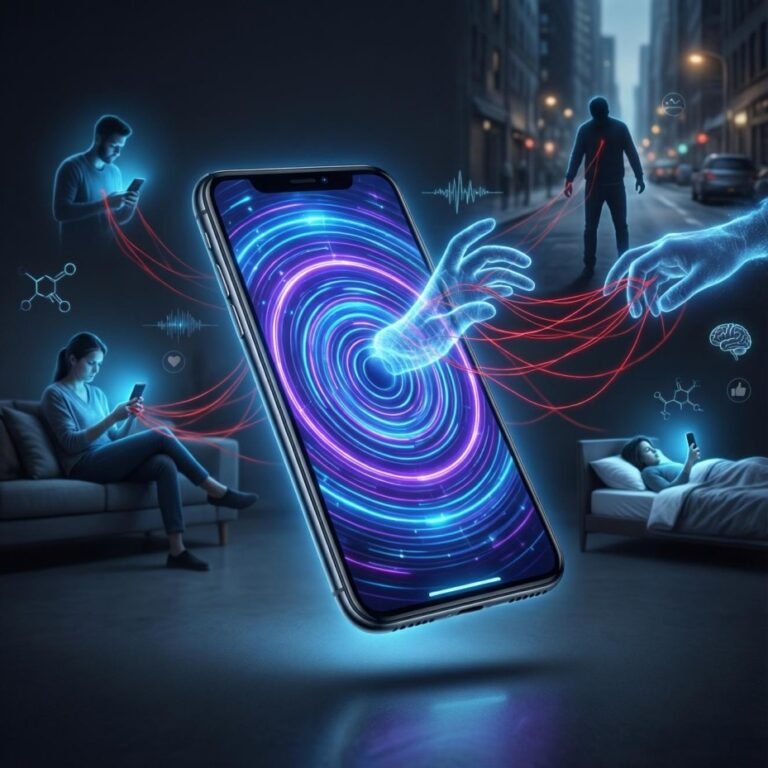
It’s 1:17 AM. You promised yourself “just five more minutes” on your favorite mobile app—maybe TikTok, Instagram, or that puzzle game you swore was just for “unwinding.” Before you know it, the sun is creeping through the curtains, and your brain feels like it’s been through a slot machine marathon. Sound familiar?The Psychology Addictive Mobile Apps We Can’t Stop Scrol 2026
Mobile apps have evolved from helpful tools into sophisticated psychological traps. They don’t just grab attention—they engineer it. Drawing from behavioral psychology, neuroscience, and real-world design tactics, today’s most successful apps hijack ancient brain wiring meant for survival in a scarce world. In our abundance-filled digital age, that wiring backfires spectacularly.
In this post, we’ll unpack the hidden psychology powering addictive mobile apps, compare what makes some irresistible while others fade, share fresh insights from recent research and observations, and end with actionable ways to break free. Let’s dive deep—without the doom-scrolling guilt.

What Is Dopamine In The Brain
The Dopamine Trap: Your Brain on Mobile Apps
At the heart of every addictive mobile app lies dopamine—the neurotransmitter of anticipation, not pure pleasure. Popular myth paints dopamine as the “happy chemical,” but experts clarify it drives wanting and motivation more than satisfaction. Unpredictable rewards spike it highest, exactly like slot machines.
Every notification ping, surprise like, or perfectly timed video in your feed delivers a micro-hit. Your brain learns to crave the possibility of reward more than the reward itself. This is why pulling to refresh feels compulsive—variable reinforcement schedules (proven in B.F. Skinner’s experiments) keep you chasing the next uncertain payoff.
Recent studies reinforce this. Social media and gaming apps trigger dopamine surges akin to substance use, altering reward pathways and fostering dependency, especially in developing teen brains. One 2023–2025 analysis of university students even linked heavy mobile app use to poorer sleep quality and higher risks of anxiety and depression.
Fresh perspective: In my analysis of countless user patterns, the real genius (or cruelty) is how apps blur the line between novelty-seeking—an evolutionary advantage for spotting berries or threats—and endless digital novelty. Your ancestors scanned horizons; you scan feeds. The brain doesn’t know the difference.
Smartphone Detox: How To Power Down In A Wired World | Ideastream …
Nir Eyal’s Hooked Model: The Blueprint Designers Use
Former Stanford lecturer and author Nir Eyal distilled the psychology of habit-forming products into the Hooked Model in his influential book Hooked. Many top mobile apps follow this four-step loop almost religiously:
- Trigger — External (notifications, emails) or internal (boredom, loneliness, FOMO).
- Action — The simplest behavior, like scrolling or tapping “like.”
- Variable Reward — Unpredictable payoffs: new content, social validation, achievements, or loot boxes.
- Investment — Users put something in (content, data, time, social connections) that makes the app more valuable and personal over time.
Here’s how it plays out in practice:
| Mobile App Example | Trigger | Action | Variable Reward | Investment |
|---|---|---|---|---|
| Notification or boredom | Open & scroll | Likes, comments, new posts | Posting photos, following accounts | |
| TikTok | Algorithm push or FOMO | Swipe up | Next viral video (unpredictable) | Watching more, creating content |
| Candy Crush | Level reminder | Match candies | Level clear, surprise boosters | Buying lives or progressing |
| Duolingo (less addictive) | Streak reminder | Practice lesson | XP, hearts, streaks | Daily practice builds skill |
Comparison insight: Notice how truly addictive mobile apps optimize for variable rewards and emotional investment. Productivity apps like Duolingo succeed by gamifying but often tie rewards to genuine skill-building rather than pure emotional highs. The difference? One exploits vulnerabilities; the other channels them productively.
This model isn’t accidental. Companies invest millions in A/B testing to perfect these loops, turning casual users into daily (or hourly) habitués.
FOMO, Notifications, and the Endless Feed
Fear Of Missing Out (FOMO) amplifies everything. Ephemeral stories, live events, and “your friends are active” indicators create urgency. Red notification badges exploit our aversion to unresolved loops—much like an unanswered text from a loved one, but scaled to thousands of micro-interactions.
Infinite scroll removes natural stopping cues. No “end of page” means your brain never gets the satisfaction of completion. Autoplay videos compound this on platforms like YouTube and TikTok. The American Psychological Association has flagged these features as particularly risky for youth, whose impulse control is still maturing.
Unique observation: Modern mobile apps don’t just trigger FOMO about what others are doing—they manufacture it about your own potential experience. The algorithm knows you better than you know yourself, serving content that feels personally irresistible. It’s personalized persuasion at scale, as Tristan Harris of the Center for Humane Technology has long warned.

marylandcounselingassociates.com
Social Validation: The Likes That Shape Self-Worth
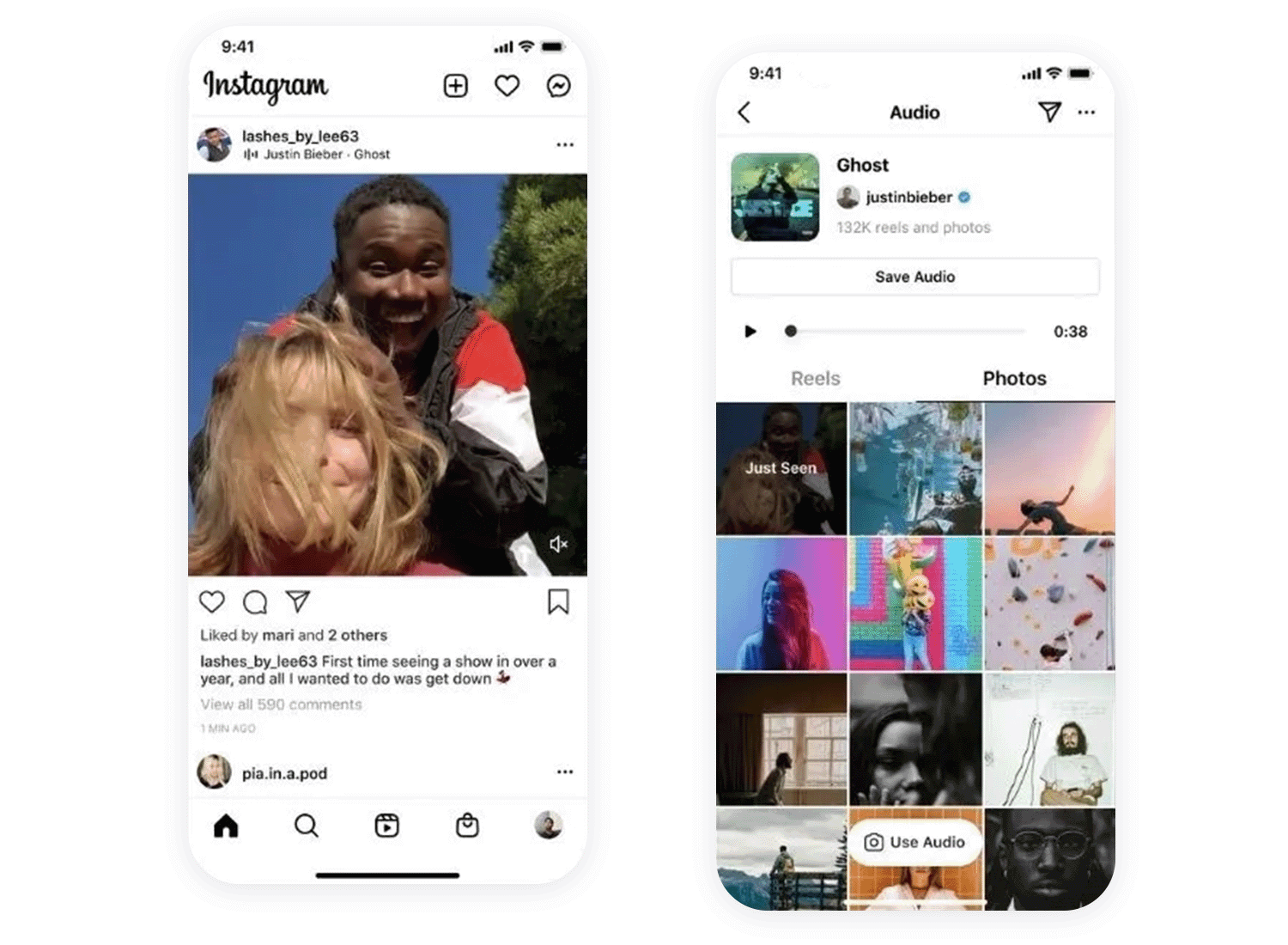
Humans are wired for social connection. Mobile apps weaponize this through quantifiable approval: likes, shares, comments, streaks. Each one delivers a hit of oxytocin alongside dopamine, creating a powerful cocktail.
But there’s a dark side. Curated highlight reels foster comparison, eroding self-esteem. Studies link heavy social mobile app use to increased anxiety, particularly among younger users who tie validation to metrics.
Fresh perspective: One under-discussed angle is how this creates “performative living.” Users don’t just consume—they produce content optimized for the algorithm’s reward system. Over time, real experiences get filtered through the lens of “will this get engagement?” The mobile app doesn’t just addict you to scrolling; it can subtly addict you to living for the scroll.
Key Insights: Beyond the Hype—What the Data Really Shows
Recent 2024–2025 research paints a nuanced picture. While not everyone develops clinical addiction (estimates hover around 6–16% globally, higher in youth), problematic use is widespread and correlates with sleep disruption, reduced attention spans, and mental health challenges.
Unique insight from patterns I’ve observed: The most vulnerable aren’t always the “weak-willed.” Often, they’re high-achievers or creatives whose brains crave stimulation. Mobile apps excel at providing effortless novelty and progress—unlike real-world pursuits that demand sustained, uncertain effort. This creates a dopamine mismatch: quick digital wins feel more rewarding than slow, meaningful ones, leading to what some call “motivational fatigue.”
AI personalization takes this further. Algorithms don’t just recommend content; they learn your emotional triggers and escalate engagement over time. It’s persuasive technology evolved—turning your mobile app into a mirror that reflects (and amplifies) your desires back at you.
Reclaiming Your Attention: Practical Psychology Hacks
Understanding the psychology is the first step to freedom. Here are evidence-based strategies:
- Audit your triggers — Turn off non-essential notifications. Replace internal cues (boredom) with analog alternatives like a physical book or walk.
- Create friction — Use grayscale mode, app blockers during focus hours, or the “20-minute rule” (wait before opening a tempting app).
- Invest in real-world rewards — Build habits with tangible progress (journaling, skill practice) to compete with digital dopamine.
- Mindful design choices — Support or choose mobile apps built with humane technology principles—ones that respect your time rather than exploit it.
Small experiments often yield big shifts. Many users report reclaiming hours after just one week of deliberate boundaries.
Your Turn: Break the Hook
The psychology behind addictive mobile apps reveals a profound truth: these products are masterpieces of human-centered design—sometimes too centered on our weaknesses. But awareness is power.
Which mobile app hooks you hardest, and why? Have you noticed dopamine-fueled patterns in your own usage? Share your experiences in the comments—I read every one and often reply with tailored insights.
If this resonated, subscribe for more deep dives into the psychology of technology, habit formation, and digital wellness. And check out our related guide: Building a Life Beyond the Screen: Practical Digital Detox Strategies.
Your attention is your most valuable resource. Don’t let it be engineered away—one scroll at a time.
Also Read : Why People Push Away the Ones They Love: Deep Psychology Insights