
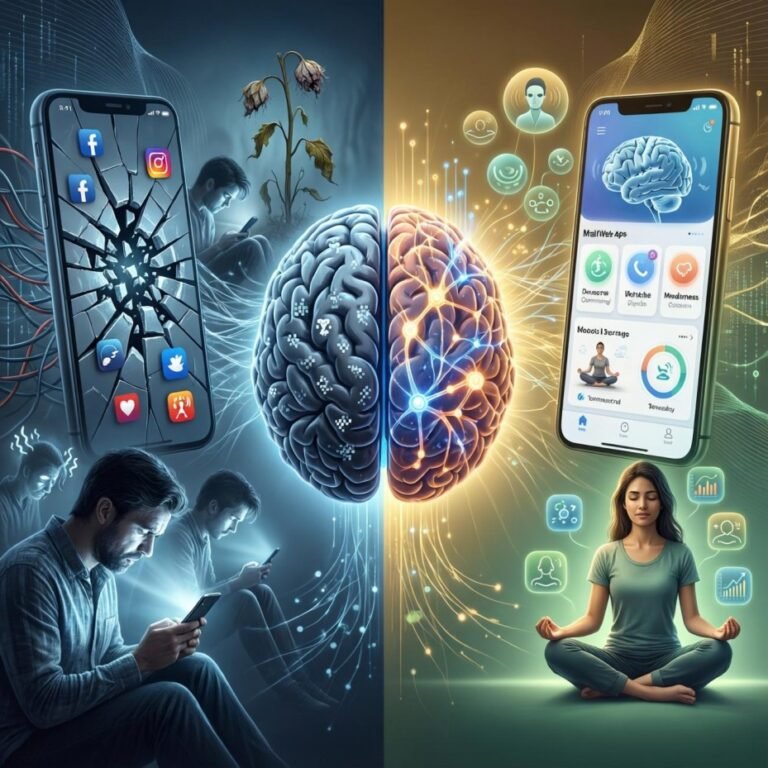

The Double-Edged Sword in Your Pocket
You’ve probably felt it: that late-night scroll that starts innocently but leaves you anxious, envious, or wired. Mobile apps have woven themselves into the fabric of modern life, delivering connection, entertainment, and convenience at our fingertips. Yet as average global screen time hovers around 6-7 hours daily—with mobile devices claiming a huge share—the question of how these apps affect mental health has never been more urgent.Mental Health, Risks & Benefits 2026
In our pursuit of better health, we can’t ignore the mental side. Apps aren’t neutral; they can hijack our brain’s reward system or offer genuine support. This isn’t another generic warning about “too much screen time.” Instead, let’s explore the nuanced reality: the addictive designs that erode well-being, the evidence-based tools that build resilience, and practical ways to reclaim control. Drawing from recent studies and real-user patterns, here’s a balanced, research-driven look at how mobile apps influence mental health—and how to tip the scales toward positive change.

Scrolling on your smartphone might be killing your sleep | The …
The Dark Side: How Social and Entertainment Apps Undermine Mental Health
Many popular apps thrive on keeping us engaged through variable rewards—likes, notifications, endless feeds. This isn’t accidental; it’s engineered to trigger dopamine surges, the brain’s “feel-good” chemical tied to motivation and pleasure.
Dopamine loops create addiction-like patterns. Quick hits from scrolling mimic substance rewards, leading to tolerance: you need more time online for the same buzz, which can leave you feeling unmotivated or low when offline. Research links this to heightened anxiety, reduced attention, and even depressive symptoms as natural dopamine production downregulates.
Social comparison and FOMO amplify insecurity. Platforms like Instagram or TikTok encourage curated highlight reels. Constant exposure to “perfect” lives correlates strongly with body image issues, loneliness, and lower self-esteem—especially among teens and young adults. Studies show heavy social media users face 2-3 times higher odds of depression and anxiety symptoms.
Notifications and sleep disruption fuel a vicious cycle. Blue light and alerts fragment attention and delay bedtime. Excessive evening use links to poorer sleep quality, which directly worsens mood, concentration, and emotional regulation. One analysis found kids and teens with high screen time develop more emotional and behavioral problems, often turning back to screens for coping—creating a feedback loop.
Stats paint a concerning picture. In recent surveys, 41% of teens with the highest social media use rate their mental health as poor or very poor (versus 23% for low users). Problematic use has risen, with over 1 in 10 adolescents showing signs of difficulty controlling engagement.
From what users share in conversations (and data echoes), many describe a subtle erosion: more irritability, less presence with loved ones, and a nagging sense of disconnection despite being “connected.”

The interaction of alcohol with brain reward circuitry (II …
The Bright Side: How Therapeutic Apps Can Boost Mental Health
Not all apps drain us. A growing category of mental health-focused apps delivers structured support, often rivaling or complementing traditional therapy for mild-to-moderate issues. Recent meta-analyses confirm standalone smartphone apps can produce meaningful symptom relief.
CBT, mindfulness, and mood-tracking tools show real efficacy. A 2025 Lancet Digital Health review of dozens of randomized trials found significant effects: apps targeting depression yielded a Hedges’ g of 0.45 (moderate effect), anxiety 0.35, and even stronger results for sleep problems (0.71). Features like cognitive behavioral techniques or chatbots amplified benefits.
Accessibility fills critical gaps. With therapy waitlists long and stigma persisting, apps offer immediate, private entry points. Studies show they help reduce worry, rumination, and symptoms while users await professional care. Gamified or personalized apps improve adherence and outcomes, particularly for students and young adults facing stress or burnout.
Market growth reflects demand—and potential. The mental health apps sector was valued at around $7.5 billion recently and is projected to expand rapidly, driven by awareness and proven tools for anxiety, depression, and well-being.
Real impact emerges in stories: someone using a daily gratitude or breathing app reports calmer mornings; another credits mood logging with catching patterns before spirals deepen. These aren’t magic fixes, but they build skills and agency.
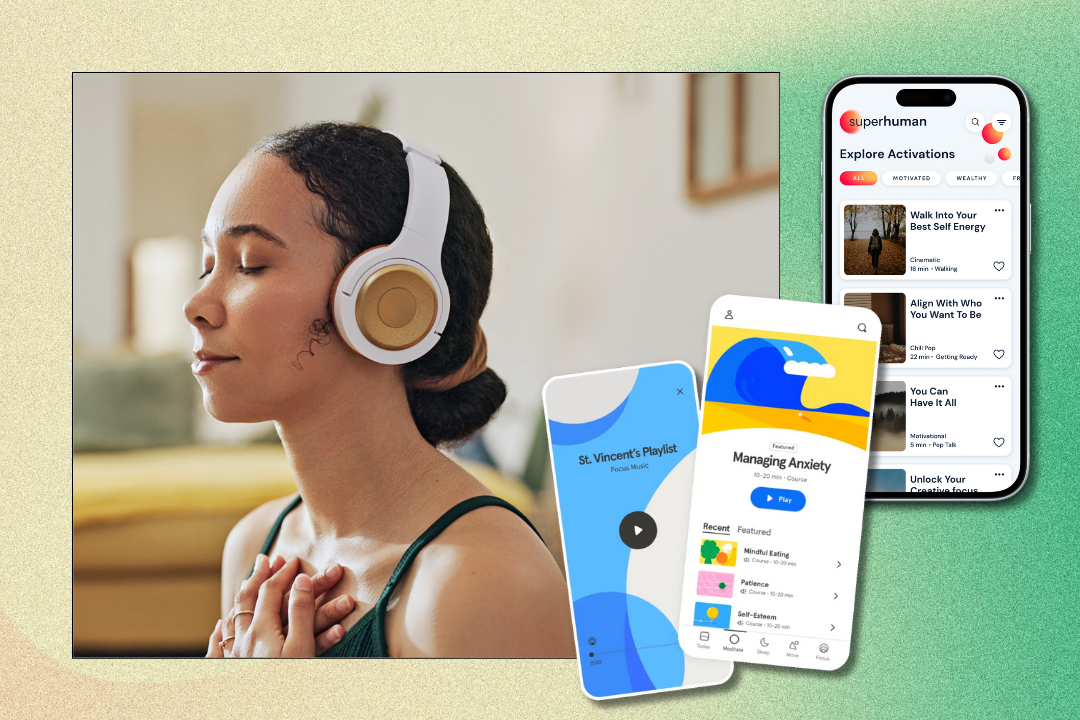
Best mindfulness apps in 2025 to keep calm during a crisis | The …
Comparison: Harmful vs. Helpful App Designs
Understanding design differences helps us choose (and use) apps more intentionally. Here’s a clear breakdown:
| Aspect | Harmful Designs (e.g., Social Media) | Helpful Designs (e.g., Therapy/Mindfulness Apps) |
|---|---|---|
| Reward Mechanism | Variable, unpredictable (likes, notifications) | Structured, skill-based (progress tracking, guided sessions) |
| User Goal | Passive consumption, endless scrolling | Active engagement, habit-building |
| Impact on Focus | Fragmented attention, multitasking | Focused practice, mindfulness or reflection |
| Evidence Base | Correlational links to anxiety/depression | RCTs and meta-analyses showing symptom reduction |
| Long-Term Effect | Potential tolerance and emotional drain | Skill transfer to real life, sustained well-being |
This isn’t binary—many apps blend elements—but awareness empowers better choices.

The Impact of Social Media on Mental Health
Key Insights: Fresh Perspectives for Healthier Use
Insight 1: It’s the relationship, not the technology. Brains develop rapidly in youth, making teens more vulnerable to addictive patterns, yet adults aren’t immune. The pandemic accelerated reliance on apps for connection and coping, revealing both isolation risks and support opportunities.
Insight 2: Personalization is the future. Emerging apps use AI for tailored interventions, potentially increasing efficacy beyond one-size-fits-all tools. Early data on adaptive features (e.g., adjusting based on mood logs) is promising.
Insight 3: Small shifts yield big returns. One compelling study showed limiting social media to 30 minutes daily reduced loneliness and depression. Another found apps targeting repetitive negative thinking (rumination) improved well-being, anxiety, and depression scores significantly.
A fresh angle from user patterns I’ve observed: many who “quit” social media cold-turkey relapse, but those who replace it—swapping 20 minutes of scrolling for a guided journal or walk-tracking app—report lasting mood lifts and better sleep. It’s less about deprivation and more about intentional substitution.
Practical Strategies for Balanced App Use:
- Audit and curate: Review screen time reports; delete or mute draining apps. Set “focus modes” that limit notifications.
- Leverage built-in tools: Use grayscale mode, bedtime wind-down features, or app timers.
- Pair with real-life anchors: Follow app sessions with movement, conversation, or nature.
- Choose evidence-based options: Look for apps citing clinical trials (e.g., those incorporating CBT or mindfulness).
- Track your own data: Note mood before/after use to spot personal patterns.
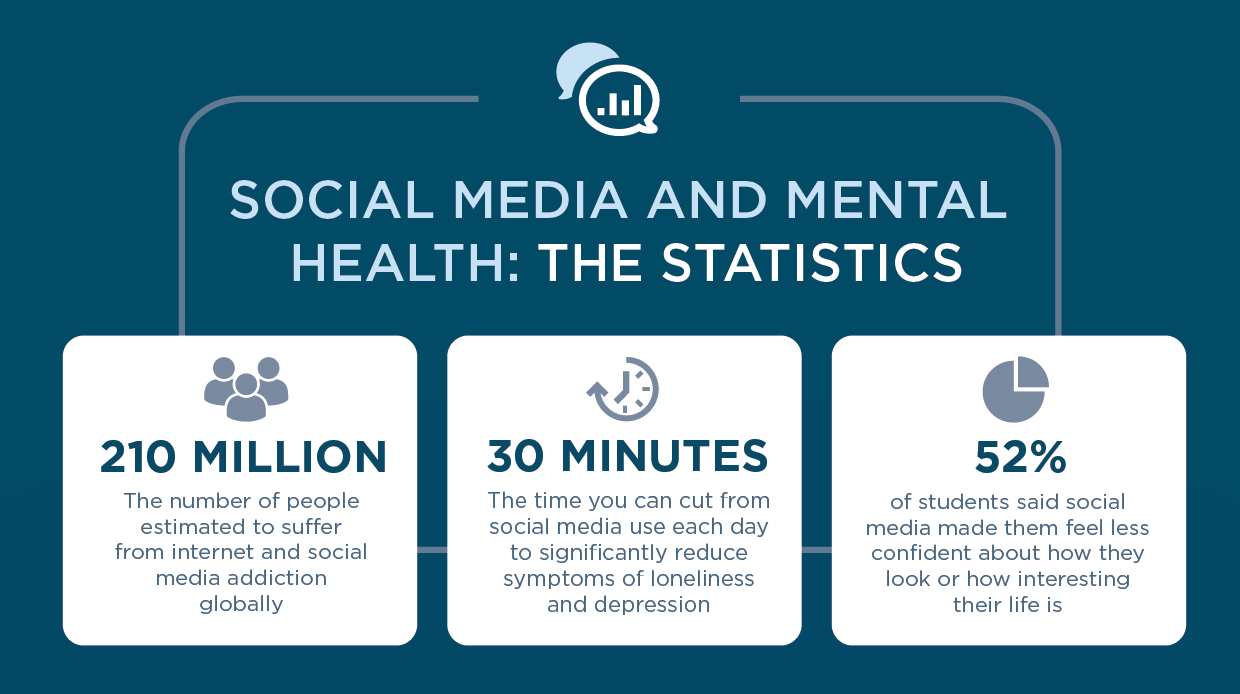
Social media and mental health | Social media guide – Priory
Reclaiming Agency: Your Path to Better Health
Mobile apps will continue shaping daily life, but we don’t have to be passive. The evidence is clear: unchecked social and entertainment apps often correlate with heightened anxiety, disrupted sleep, and lower well-being, while thoughtfully designed mental health tools offer accessible, effective support for many.
The most empowering insight? Health—mental and overall—thrives on awareness and agency. By understanding dopamine dynamics, prioritizing skill-building apps, and setting boundaries, you transform technology from a stressor into a genuine ally.
What’s one small change you’ll make this week—perhaps trying a short mindfulness session or auditing your notification settings? Share your experiences in the comments below, or explore more on digital wellness and holistic health here on the site. If you’re ready for deeper support, consider subscribing for weekly tips or consulting a professional alongside helpful apps.
Your mental health matters. Start small, stay consistent, and watch how intentional app use contributes to a calmer, more resilient you.
Also Read : Hidden Issues in Popular Mobile Apps 2026: Privacy & Security.