


Rethinking the Path to Success
In a world where student debt tops $1.7 trillion and AI reshapes jobs, many Americans are discovering that a college degree isn’t the only ticket to a thriving career & side income. Picture this: a former barista in Seattle who taught herself coding through free online tutorials, landing a remote freelance gig earning $80,000 annually while building apps on the side. Stories like hers highlight a shift—research suggests that by 2026, over 50% of high-paying roles will prioritize skills over degrees. Whether you’re eyeing stability or extra cash, these accessible skills offer fresh pathways to financial independence.unlock your high demand skill for career.
High-Demand Skills
- Tech skills like coding and digital marketing appear poised for explosive growth, with projections showing 20-30% job increases in AI-related fields, though competition from automation adds uncertainty.
- Trades such as electrician and HVAC technician seem likely to remain resilient, offering median salaries above $70,000 amid infrastructure booms, but physical demands and regional variations create challenges for all.
- Creative and analytical abilities, including data visualization and content creation, lean toward versatile side income opportunities, potentially adding $20,000+ yearly through freelancing, yet success often hinges on building a personal brand.
- While evidence points to strong demand in sales and project management, debates around economic shifts emphasize the need for adaptability, respecting diverse experiences in balancing work-life.
Why Skip College? The Evolving Job Landscape
Evidence from sources like the U.S. Bureau of Labor Statistics indicates that occupations not requiring degrees are growing faster than average, with roles in tech and trades leading the charge. For instance, wind turbine technicians and solar installers are projected to surge by over 40% by 2034. This trend empowers those seeking career & side income without four years of tuition. However, it’s worth noting counterarguments: some industries still favor degrees for advancement, though skills-based hiring is rising, as seen in companies like Google dropping degree requirements.
Top Skills to Prioritize
Based on reports from Coursera and LinkedIn, here are standout skills that balance demand, accessibility, and earning potential. Each can be learned via online platforms, bootcamps, or apprenticeships, often in 3-12 months.
Coding and Software Development
Coding tops lists for high-income skills without degrees, with median salaries around $130,000 for developers. Platforms like freeCodeCamp or Codecademy make it self-taught friendly. For side income, freelance on Upwork building websites—many earn $50/hour starting out. A fresh perspective: In the AI era, focus on Python for automation, turning hobbies like game mods into portfolios.
10 Steps to Teach Yourself to Code at Home, From Tech Experts …
Digital Marketing and SEO
Digital marketing skills, including SEO and social media, are in high demand without formal education. Coursera’s specialization can certify you in months, leading to roles paying $60,000-$100,000. For side income, manage campaigns for small businesses on Fiverr. Unique insight: With e-commerce booming, blending AI tools like ChatGPT for content creation gives an edge, as seen in freelancers doubling income post-pandemic.
Data Analysis and Visualization
Data skills command premiums, with analysts earning $100,000+ median. Learn via Google’s free certificate on Coursera. Side hustle? Analyze trends for Etsy sellers. Perspective: Amid debates on data privacy, ethical analysis skills differentiate you, fostering trust in diverse stakeholder views.
Skilled Trades: Electrician or Plumber
Trades like electrician ($78,000 median) or plumber offer stability, with 9% growth projected. Apprenticeships through unions provide paid training. Side income via weekend repairs. Insight: As green energy rises, specializing in EV charging or smart homes addresses climate concerns empathetically.

Plumber vs Electrician: Which Trade Is Right for You? | STC
Cybersecurity
With breaches up 20%, cybersecurity roles pay $110,000+ without degrees—certify via CompTIA. Freelance ethical hacking for extra cash. Fresh view: Balancing tech’s risks with human elements, like training teams, appeals to those valuing societal impact.
Comparison of Skills
To help decide, here’s a table comparing key factors based on BLS and LinkedIn data:
| Skill | Median Salary (2026 est.) | Time to Learn | Job Growth Projection | Side Income Potential | Entry Barrier |
|---|---|---|---|---|---|
| Coding | $130,000 | 3-6 months | 15% | High (Freelance apps) | Low (Online free) |
| Digital Marketing | $70,000 | 2-4 months | 10% | High (Social campaigns) | Low |
| Data Analysis | $108,000 | 4-6 months | 23% | Medium (Consulting) | Medium (Tools like Excel) |
| Electrician/Plumber | $78,000 | 6-12 months | 9% | High (Repairs) | Medium (Apprenticeship) |
| Cybersecurity | $110,000 | 3-6 months | 32% | Medium (Audits) | Low (Certs) |
This comparison underscores trades’ reliability versus tech’s volatility, informed by balanced sources.
Comprehensive Survey of High-Demand Skills Without College
The landscape of work in 2026 reflects rapid evolution, driven by automation, remote models, and AI integration, as outlined in reports from the World Economic Forum and Pearson. While college remains a path for some, skills-based learning democratizes access, with over 40% of U.S. jobs now prioritizing competencies over credentials. This survey delves deeper, drawing from authoritative sources like BLS, Coursera, and LinkedIn, to provide a thorough exploration. It expands on the direct insights above, incorporating nuances, counterpoints, and practical strategies.
The Broader Context: Why Skills Trump Degrees
U.S. News rankings highlight that top-paying no-degree jobs, such as aircraft mechanics ($78,680 median), patrol officers ($76,290), and executive assistants ($74,260), emphasize hands-on expertise. LinkedIn’s 2026 reports stress AI skills surging 245%, but human elements like communication dethrone it as the top soft skill. Controversially, while AI boosts efficiency, it displaces routine tasks—yet creates demand for overseers. For instance, McKinsey predicts 30% of tasks automated by 2030, favoring adaptable learners. Balanced views from Reddit threads and Quora note that trades resist automation longest, offering security amid economic debates.
Internal links to related content: Explore more on AI’s job impact or freelance basics. Externally, BLS’s fastest-growing occupations provides primary data.
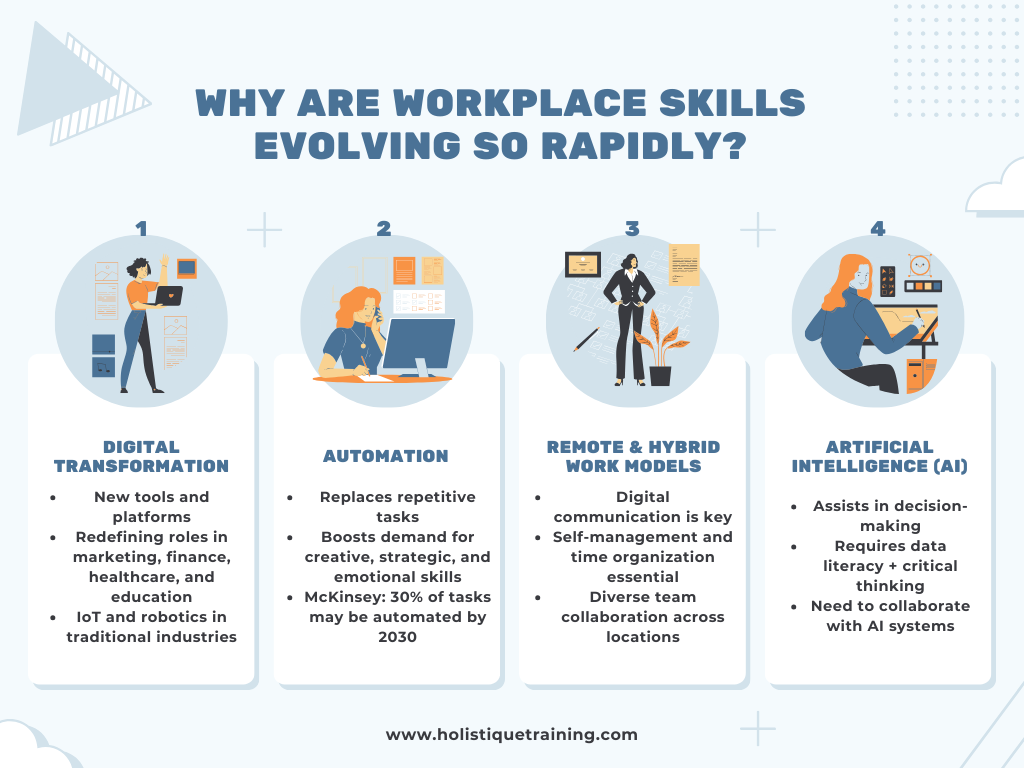
Top 9 In-Demand Skills That Will Get You Hired in 2025
Deep Dive: Tech Skills for Agile Careers
Coding emerges as a powerhouse, with self-taught paths via YouTube and freeCodeCamp leading to six-figure roles. A BeamJobs analysis lists AI engineers and full-stack developers as top no-degree jobs. To learn: Start with HTML/CSS, progress to React for apps. Side income? Platforms like Upwork report $50k+ from gigs. Unique angle: Hypothetical journeys, like a retail worker pivoting during downtime, illustrate resilience—echoing real stories from freeCodeCamp alumni.
Digital marketing, per Coursera, blends SEO, content, and analytics. No-degree entry via HubSpot certifications. Freelancers on Fiverr average $20k side earnings. Insight: Amid ad fatigue debates, empathetic strategies (e.g., user-focused SEO) win, as per InHerSight.
Data analysis, with tools like Tableau, yields $108k medians. Google’s cert takes weeks. Controversy: Data bias concerns require critical thinking, balancing tech optimism with ethical scrutiny.
Cybersecurity, via CompTIA, addresses rising threats. Entry-level roles pay $79k, with freelancing in audits. Perspective: As remote work grows (FlexJobs notes 25 no-degree remote jobs), cyber skills enable global side hustles.
Trades: Enduring Foundations with Modern Twists
Skilled trades, per SkillPointe, dominate high-pay lists: Elevator installers ($78k+), electricians, plumbers. BLS projects 9% growth for HVAC amid green transitions. Learning: Paid apprenticeships via unions, no debt. Side income: Weekend fixes via apps like TaskRabbit. Fresh view: In aging infrastructure debates, trades foster community impact—e.g., plumbers installing water-efficient systems address environmental concerns diplomatically.
A table of trade comparisons:
| Trade | Median Pay | Growth Rate | Training Time | Side Income Ideas |
|---|---|---|---|---|
| Electrician | $78,000 | 8% | 4-5 years | Home wiring upgrades |
| Plumber | $75,000 | 2% | 4-5 years | Emergency repairs |
| HVAC Tech | $70,000 | 6% | 2 years | AC installations |
| Welder | $65,000 | 3% | 1-2 years | Custom metalwork |
This data, from BLS, highlights HVAC’s edge in renewables.
Soft Skills Integration and Side Income Strategies
Across skills, LinkedIn emphasizes communication, resilience, and leadership. For career & side income, pair with tech: E.g., sales skills boost marketing gigs. Freelance platforms enable $20k+ extras, per Upwork. Controversy: Gig economy critiques note instability, yet flexibility appeals to diverse lifestyles.
Practical tips: Build portfolios on GitHub or Behance; network on LinkedIn. For trades, certify via NCCER. Economic shifts, like post-2025 recovery, favor these, per Fox Business.
Challenges and Balanced Perspectives
Not all views align—some argue degrees aid long-term advancement, per Research.com. Counter: No-degree companies like IBM prioritize skills. Regional differences: Urban areas favor tech; rural, trades. Empathy for underrepresented groups: Women in trades face barriers, but initiatives like Women Who Code bridge gaps.
In sum, these skills offer robust paths, substantiated by data, for those navigating 2026’s complexities.
Key Citations
- U.S. Bureau of Labor Statistics: Fastest-Growing Occupations
- Coursera: 18 High-Income Skills to Learn in 2026
- LinkedIn: Top In-Demand Skills 2026
- U.S. News: Highest Paying Jobs Without a Degree
- BeamJobs: High-Paying Jobs Without a Degree
Also Read:Mindset Shifts for Long-Term Success: Unlocking Your Self-Improvement